




Ministry Prepares River Mouth Restoration for Disaster Recovery in Sumatra
- Editor RM Bambang Murijanto Bagus Kusuma Adji
- 20 Jan 2026
- Voice of Indonesia
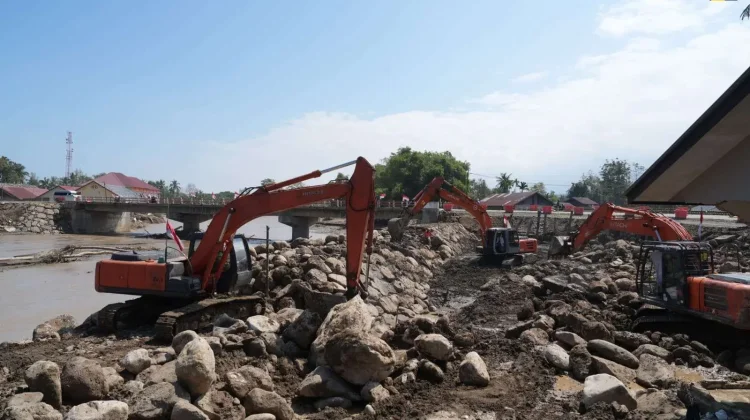
RRI.CO.ID, Jakarta — The Indonesian Public Works Ministry is preparing a comprehensive restoration plan for river mouths in disaster-affected regions across Aceh, North Sumatra, and West Sumatra. This initiative is a critical component of post-disaster rehabilitation and reconstruction, as river mouths play a pivotal role in flood control and managing marine sediment.
Public Works Minister, Dody Hanggodo, emphasized that river mouth management requires a specialized technical approach tailored to the unique characteristics of each site. He noted that because flow dynamics vary, restoration methods must be adapted to specific field conditions.
Minister Dody highlighted that most of the affected estuaries require the use of specialized dredgers. This is particularly necessary for large rivers experiencing severe shallowing due to post-disaster sedimentation.
"Most river mouth clearing operations require a dredger. Standard heavy equipment like excavators or other expedited methods are simply not enough," he said in a written release received in Jakarta on Monday, December 19, 2026.
The Ministry has identified 23 affected river mouths across Aceh, North Sumatra, and West Sumatra, with progress ranging from active restoration to the planning phases. Currently, eight sites in Aceh and eleven in North Sumatra are being addressed or planned, while West Sumatra has successfully handled three of its four impacted estuaries.
Minister Dody stressed that the deployment of dredgers must be supported by meticulous design planning for material disposal. This ensures that dredged materials are relocated safely and effectively.
"If the material is to be repurposed for embankments, the design must be technically sound to ensure they can withstand future floods. For major estuaries, the process has transitioned into the rehabilitation and reconstruction phase, moving beyond mere emergency response," he explained.
During the initial emergency response phase, the Ministry prioritized reinforcing existing levees and conducting river normalization at critical points. These efforts focused primarily on urban areas to facilitate temporary water flow.
Meanwhile, Feriyanto Pawenrusi, Head of the Sumatra II River Basin Organization (BBWS) in Medan, underscored that river mouths are vital for controlling floods in both upstream and downstream areas. He warned that sedimentation and narrowing at these points cause water flow to decelerate, leading to overflows in residential areas and increasing the risk of recurring floods.
"The condition of the river mouth is decisive. If it is blocked, no matter how well the upstream normalization is handled, the water will still struggle to reach the sea. Therefore, river mouth management must be an integral part of a comprehensive flood control system," said Feriyanto.
This restoration effort will be integrated into a measurable and sustainable post-disaster reconstruction plan. The goal is to restore the natural function of rivers and estuaries while mitigating future hydrometeorological disaster risks. (Annaila Azzahra/Bambang MBKA)
/d94esbg6wwut4z4.jpeg)