



Ministry to Revitalize Pasir Angin Site Museum in Bogor
- Editor RM Bambang Murijanto Bagus Kusuma Adji
- 17 Jan 2026
- Voice of Indonesia
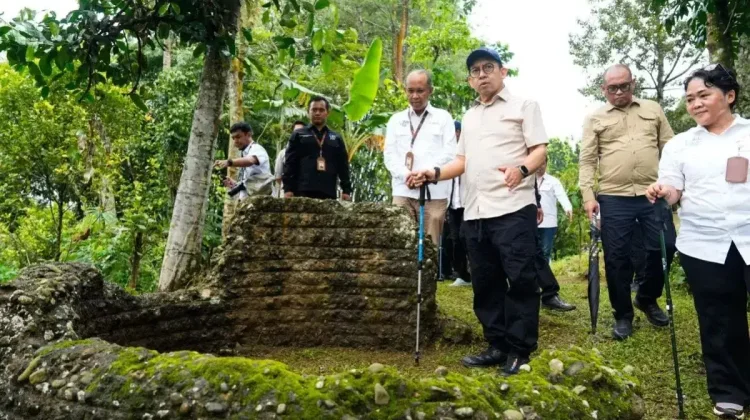
RRI.CO.ID, Jakarta - Indonesian Culture Minister Fadli Zon reaffirmed the government's commitment to revitalizing the Pasir Angin Site Museum in Bogor Regency, West Java. He emphasized the project's vital role in making history more accessible and relevant, particularly for younger audiences.
He made the remarks during his tour of the museum in Pasir Angin Village, Cibungbulang Subdistrict, on Saturday, January 17, 2026. The visit focused on directly assessing the cultural heritage assets and the site's potential as an open, contextual learning space for the public.
“This is a historic site that we hope to revitalize and supplement with comprehensive discovery data in the future. By doing so, we aim to make this site increasingly attractive for the younger generation to visit and learn about the history preserved here at Pasir Angin,” said the Minister in his statement in Jakarta, as quoted by
Antara.He stressed the profound historical value embedded in the Pasir Angin area. “At this site, we can observe various cultural layers, ranging from the Neolithic era and the classical period to the colonial age. There are numerous findings to see here, from statues to other artifacts that have been supplemented with detailed descriptions,” he said.
Minister Fadli Zon portrayed the site as integral to a vast, interconnected historical ecosystem. “This site has been researched and excavated since the 1970s. It is an integral part of an ecosystem that cannot be separated from the Cianten and Cisadane river regions, as rivers are the centers of life, civilization, and trade,” he explained.
Among the notable finds is a gold mask preserved at National Research and Innovation Agency (BRIN) Cibinong, shedding light on past societies. “The gold mask discovered here provides a window into the various aspects of life within the ancient communities that once lived around this Pasir Angin site,” remarked the Minister.
The Minister also inspected the Japanese Monument, commemorating a World War II-era clash. “This region is the highest hilltop that could overlook the entire area. At that time, there were certainly not as many trees as there are today, so from this vantage point, one could directly observe the movement of troops and the dynamics of the battle,” he added.
The Pasir Angin Site Museum preserves layers of culture from prehistoric to modern times. Intensive research from 1970 to 1975 by R.P. Soejono's team uncovered artifacts of stone, iron, bronze, clay, obsidian, glass, and pottery. In 1976, a building was constructed for storage, later expanding into a public museum for education and preservation. ***