




East Kalimantan Promotes Four Cultural Heritage Sites as National Heritage in 2026
- Editor RM Bambang Murijanto Bagus Kusuma Adji
- 19 Jan 2026
- Voice of Indonesia
RRI.CO.ID, Samarinda: The East Kalimantan Provincial Education and Culture Agency has proposed four potential cultural heritage sites for national ranking in 2026, to strengthen the preservation of regional heritage.
"For cultural heritage, this year there will be a serious effort to elevate cultural heritage to national rankings for broader protection," said Lucia Dyah Prasetyarini, Cultural Officer of the East Kalimantan Education and Culture Agency, in Samarinda, Monday, January 19, 2026, as quoted by
Antara.Luci explained that priority sites currently undergoing the registration process include the Lamin Tolan vernacular architecture in West Kutai and the Sangkulirang-Mangkalihat Karst landscape in East Kutai, which has world-class historical significance.
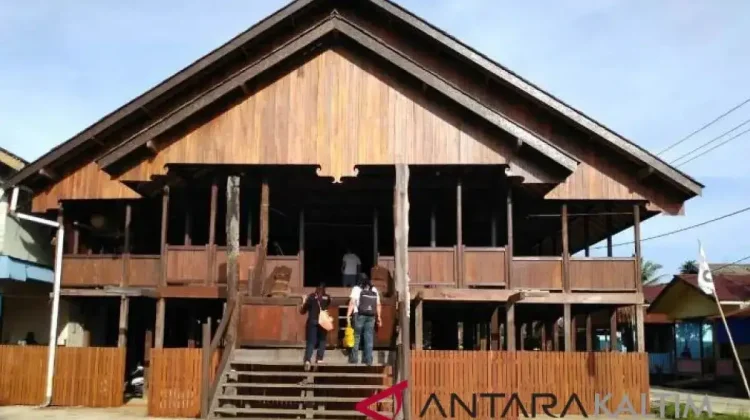
Lamin Tolan is a longhouse of the Benuaq Dayak people located in Lambing Village, Muara Lawa Subdistrict, West Kutai Regency, East Kalimantan Province. Lamin Tolan is a testament to the rich architectural culture of the Dayak people, which still survives today, retaining elements of local wisdom in every inch of its traditional structure.
The Sangkulirang-Mangkalihat Karst is the largest karst ecosystem in Kalimantan, covering approximately 1.8 million hectares, stretching from Berau Regency to East Kutai Regency in East Kalimantan Province. This karst landscape boasts a rich tropical forest and cultural heritage, including handprints on cave walls.
Two other historical sites that are also being promoted simultaneously are the Shirathal Mustaqiem Old Mosque in Samarinda and the Sadurengas Museum in Paser Regency.
Luci emphasized that this accelerated step was taken considering that currently, only one cultural heritage object in East Kalimantan has been designated as nationally recognized, the Jami Mosque in Tenggarong.
"In addition to focusing on historical infrastructure, the 2026 priority program for the Cultural Sector also targets the development of traditional arts, the utilization of cultural advancement objects, and the strengthening of institutional aspects," Luci said.
She explained that the implementation of this strategic program is being realized through technical activities, such as tracing local history and traditions, historical tours for the younger generation, and accelerating the designation of cultural heritage.
The provincial administration is also reinvigorating the Artists Come to Schools Movement as an effective method to instill a love of traditional arts from an early age in formal education settings.
"The professionalism of cultural actors is also a major focus for us, with the implementation of standardization and certification agendas to improve human resource capacity and the management of arts institutions," Luci said. ***
/z70hv7om6a02gfi.png)