



New Industrial Strategy Bolsters Indonesia’s 2026 Manufacturing Growth
- Editor Sri Wahyuni
- 18 Jan 2026
- Voice of Indonesia
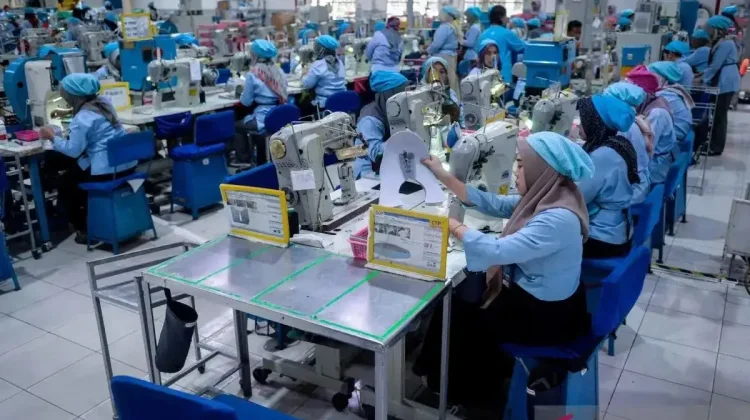
RRI.CO.ID, Jakarta - Indonesian Minister of Industry Agus Gumiwang Kartasasmita announced on Sunday, January 18, 2026, that 1,236 industrial companies officially launched their first production operations in Indonesia during the first two weeks of the year.
This industrial surge, which has already resulted in the employment of 218,892 people, serves as concrete evidence that the national manufacturing sector possesses a robust foundation despite the volatility of the global economy.
By tracking these commencements through the Ministry records as of January 15, the government aims to demonstrate that Indonesia remains a stable and attractive hub for large-scale industrial investment and job creation.
For 2026, the growth of the non-oil and gas processing industry Gross Domestic Product (GDP) is targeted to reach 5.51 percent, reinforcing the strategic position of the manufacturing sector as the backbone of national economic growth.
“The manufacturing industry continues to grow above 5 percent and serves as the driving force of the national economy. We are optimistic that this performance can be maintained and improved throughout 2026,” stated Minister Agus, as quoted by
Antara.These 1,236 industrial entities are companies that reported their construction phases in 2025 and are scheduled to be fully operational this year, supported by non-oil and gas processing industry investment totaling IDR 551.88 trillion (USD 32.69 billion).
This figure includes investments in machinery and equipment outside of land and buildings, amounting to IDR 444.25 trillion.
“The new production capacity starting operations in 2026 is a vital factor in maintaining industrial supply, strengthening the manufacturing structure, and creating new jobs,” he remarked.
To maintain growth momentum, the Ministry continues to accelerate industrialization, Industry 4.0 transformation, and the strengthening of industries from upstream to downstream. This approach ensures a sustainable supply of raw materials while enhancing the efficiency of national production chains.
On the demand side, national manufacturing growth in 2026 remains supported by the domestic market at approximately 80 percent, while the export market contributes around 20 percent.
Domestic market strengthening is pursued through import substitution policies, increasing Local Content Requirements (TKDN), and optimizing government and State-Owned Enterprise (BUMN) spending on local products.
The government is also integrating Small and Medium Industries (IKM) into the national supply chain to bolster the internal economy.
“We are ensuring that domestic industrial products become masters of their own home market. Strengthening the domestic market serves as the primary anchor for manufacturing industry growth,” Minister Agus stated.
Significant demand increases are projected in several sub-sectors, including basic metals driven by infrastructure projects and downstreaming, as well as the food and beverage industry.
Additionally, the chemical and pharmaceutical industries are expected to grow due to the rising need for healthcare products and industrial chemicals.
Regarding exports, the Ministry targets the non-oil and gas processing industry to contribute 74.85 percent of total national exports in 2026. This target is pursued through market diversification, increasing product competitiveness, and strengthening global industrial promotion.
The non-oil and gas processing sector is also targeted to absorb 14.68 percent of the total national workforce in 2026, with individual labor productivity reaching IDR 126.2 million per year.
To support these employment goals, the investment target for the non-oil and gas processing industry in 2026 is set at IDR 852.9 trillion.
In response to global challenges, the Ministry of Industry has initiated the New National Industrial Strategy (SBIN) as a sustainable policy framework. Through SBIN, the Ministry prioritizes forward and backward linkage approaches to optimize the connection between upstream, manufacturing, and service sectors.
This strategy is directed at strengthening industrial supply chains, increasing production efficiency, and expanding labor absorption. Furthermore, SBIN supports priority government programs such as food and energy self-sufficiency, strategic industry strengthening, and the free nutritious meal (MBG) program.
These industrial policies are designed to have a tangible impact on economic growth and public welfare.
"The New National Industrial Strategy serves as a reference for strengthening the national industrial structure. We are pushing for upstream and downstream approaches so that domestic industries have stronger competitiveness and a sustainable contribution to the national economy," he concluded.
With the strengthening of both supply and demand, the Ministry remains optimistic that the manufacturing industry will grow above five percent in 2026. This growth will continue to provide real contributions to job creation and the overall competitiveness of the national industry. ***