




Exploring "Dancing Tree" in Sumba's Walakiri Beach
- Editor Ahmad Faisal
- 19 Jan 2026
- Voice of Indonesia
RRI.CO.ID, Waingapu - Sumba Island, in the Indonesian province of East Nusa Tenggara, boasts enchanting natural diversity. The diversity offers a unique natural beauty that will captivate the eye.
As quoted from the RRI Voice of Indonesia's archive, one such attraction is the beauty of Walakiri Beach.
Walakiri Beach is located in East Sumba Regency, East Nusa Tenggara, approximately 24 km from the city center of Waingapu. It's located just off the main road to Umalulu, a fairly large district in East Sumba.
The beach is located in East Sumba's Watumbaka Village, Pandawai District.
Walakiri Beach boasts crystal-clear blue waters that showcase its diverse marine life. Furthermore, Walakiri Beach's unique feature is its two distinct sand textures.
The sand on the beach has an ivory white color with a slightly rough texture, like beach sand in general. Meanwhile, the sand in the area where the tide has receded is said to have a powder-like texture and is also denser.
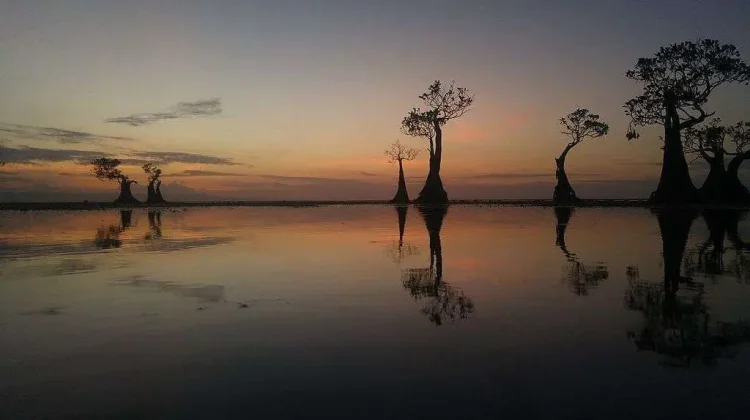
Another unique feature of Walakiri Beach is the mangrove trees growing along the western shoreline. These trees are dwarfed, unlike most other mangrove trees.
Their branches twist as if dancing, earning them the nickname 'Dancing Trees'
This view is the beach's main attraction, especially at dusk. This is because the mangrove trees create a beautiful silhouette when lit up by the orange sky.
Mangrove trees are one of the icons of Walakiri Beach. At low tide, it is said that visitors can easily walk up to these trees, known as dwarf mangroves.