



Bandung Police Trial Handheld ETLE System for Traffic Violations
- Editor Sri Wahyuni
- 18 Jan 2026
- Voice of Indonesia
RRI.CO.ID, Jakarta - Traffic enforcement in Bandung is entering a new phase as the city’s police begin socializing and testing the use of handheld Electronic Traffic Law Enforcement (ETLE) devices.
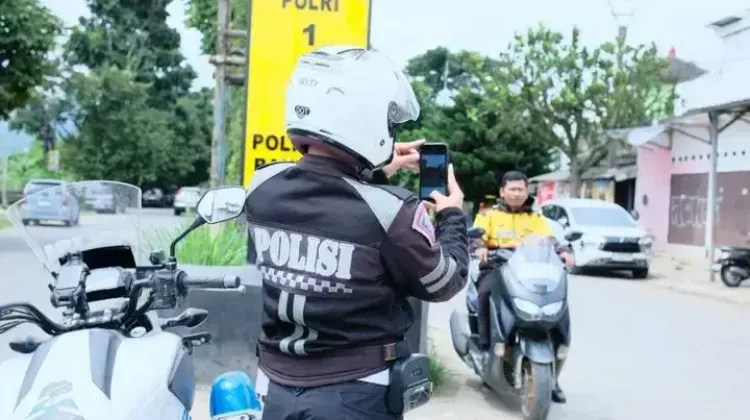
The initiative, launched by the Bandung Police Traffic Unit (Satlantas Polresta Bandung), allows officers to record violations directly in the field using specialized mobile equipment.
Chief of Bandung Police Traffic Unit, Commissioner Sigit Suhartanto, explained on Saturday, January 17, 2026, that the system enables officers to capture visible violations with a handheld device.
“Through this tool, officers can immediately photograph traffic violations, which are then uploaded into the system. The application automatically identifies the vehicle, its owner, and the type of violation for on-the-spot confirmation,” he said, as quoted by
Antara.The handheld ETLE rollout is part of the
Presisi program introduced by National Police Chief General Listyo Sigit Prabowo and implemented through the Traffic Corps under Inspector General Agus Suryonugroho.Technically, the handheld system operates in the same way as other ETLE platforms - static, mobile, portable, or onboard - but differs in its use of a dedicated smartphone equipped with the ETLE Presisi application.
“Officers simply take a photo with the device, and the system detects the license plate, owner’s name, vehicle details, and violation type,” Sigit added.
Violations targeted under the handheld ETLE include riding without a helmet, carrying more than one passenger on a motorcycle, and using license plates that do not comply with regulations.
According to Sigit, the handheld system strengthens traffic law enforcement already supported by static ETLE cameras installed at several points in collaboration with the Bandung Regency Administration. With the new tool, officers can act against violations anytime and anywhere during patrols.
“Hopefully, the presence of handheld ETLE will encourage greater discipline and compliance with traffic regulations, while also boosting public trust in the police,” he concluded. ***