




Ministry Pushes Bio-Aviation Fuel to Cut Aviation Emissions
- Editor RM Bambang Murijanto Bagus Kusuma Adji
- 19 Jan 2026
- Voice of Indonesia
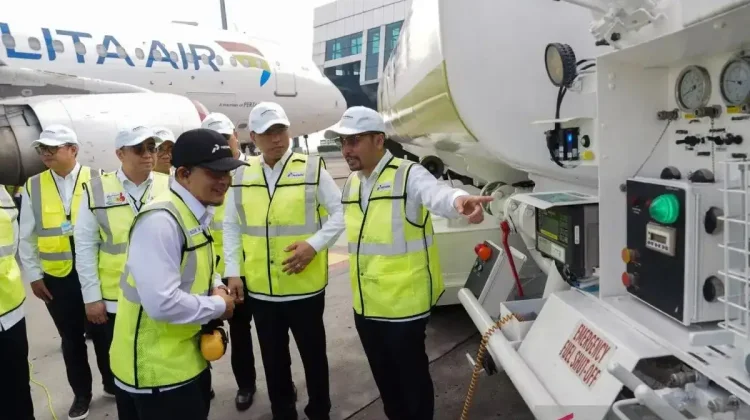
RRI.CO.ID, Jakarta — The Indonesian Ministry of Transportation is officially ramping up its push for the adoption of bio-aviation fuel, also known as Sustainable Aviation Fuel (SAF), to slash the carbon footprint of the national aviation sector.
During the "Future Leaders in Sustainable Transport" (FIRST) event in Jakarta on Monday, January 19, 2026, officials emphasized that the shift to green fuel is no longer an option but a necessity for the industry's long-term viability.
Dodhy, Head of Environmental Governance for Transportation at the Ministry, highlighted that civil aviation plays a strategic role in Indonesia’s national emission reduction targets. Bio-aviation fuel offers a critical solution for reducing fossil fuel dependency without compromising the stringent safety and operational standards required by airlines.
"Bioavtur is part of the effort to achieve low-emission air transportation. This not only supports the commitment to reduce emissions but also ensures the sustainability of the aviation sector going forward," he said, as quoted by
Antara.Dodhy noted that the use of SAF is fully aligned with Indonesia's national climate control policies and international clean energy transitions
.While the technology is already in use, most notably by Pelita Air, which utilizes SAF processed from used cooking oil, large-scale implementation faces significant hurdles. Currently, the production capacity is insufficient to meet the demands of the national fleet.
Furthermore, the industry faces a perception battle regarding the use of palm oil as a raw material. "Palm oil is still an issue that people consider unsustainable," Dodhy explained.
He admitted that international skepticism regarding the sustainability of palm oil remains a barrier. To counter this, the Ministry is focusing on proving the sustainability of the raw materials through rigorous certification and transparent supply chains.
For 2026, the Ministry of Transportation is committed to strengthening the environmental governance of the aviation sector. This includes fostering innovation and cross-sector collaboration between energy providers like Pertamina, the aviation industry, and government agencies to ensure a gradual but steady rollout of SAF.
The path forward depends heavily on data and certification. "(To move forward) with palm oil for bioavtur, we must be able to prove that the raw material is sustainable," Dodhy concluded. ***